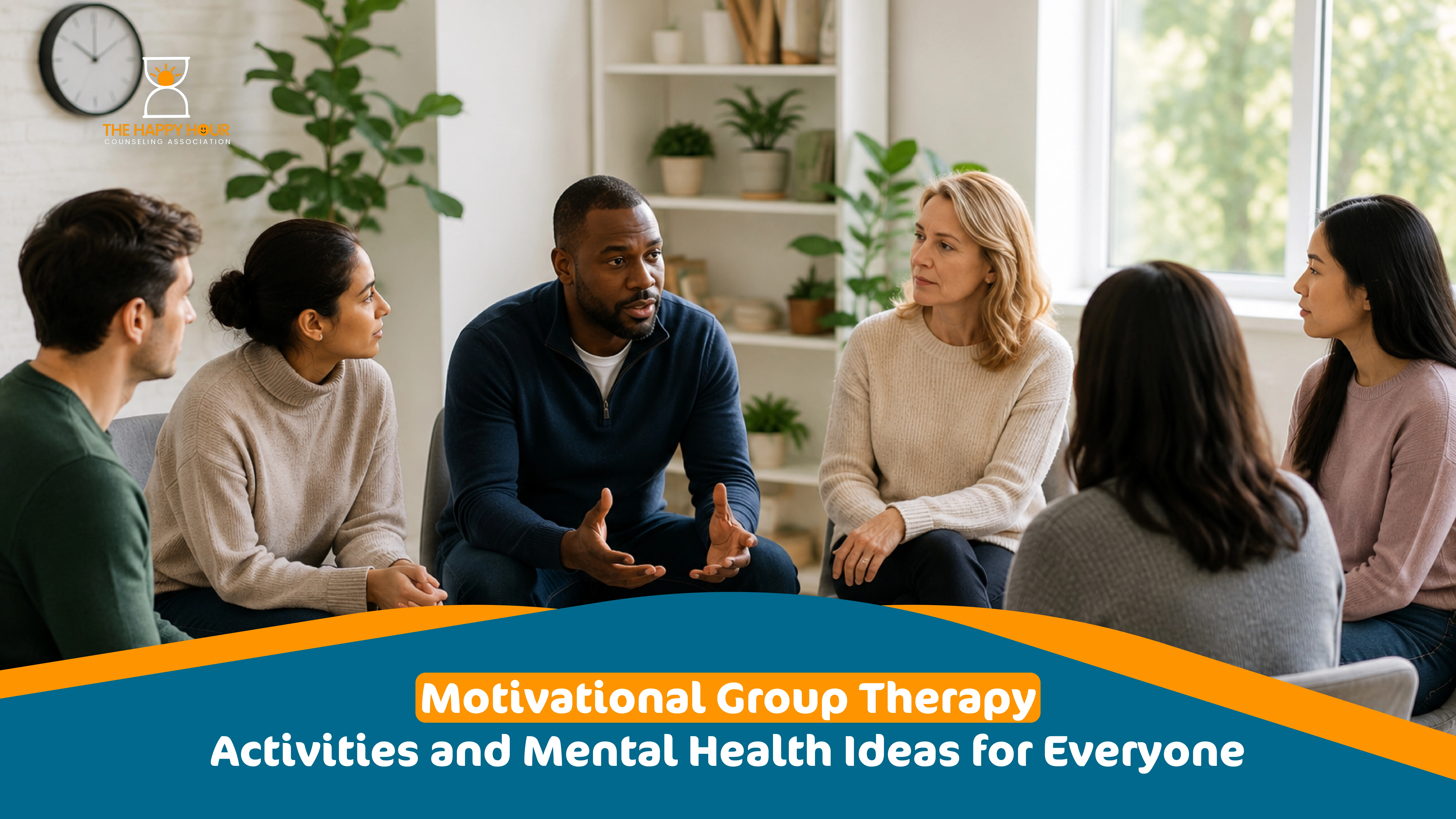
Group therapy is a process of psychological treatment which brings people together to share their experiences, build support for each other, and develop healthy coping skills. Motivational and mental health group activities give you confidence and encourage participation, strengthen connections, and promote emotional growth. These interactive exercises help foster healing, self-awareness, confidence, and resilience from adults and teens to support and counseling groups. This blog will try to explore motivational group activities and ideas for everyone.
Understanding Group Therapy
Group therapy is an organized therapeutic approach which provides an opportunity to individuals who meet together to discuss challenges, share experiences, and grow coping skills. Group therapy focuses on peer support services, collective learning, and interpersonal growth. Group therapy activities offer support to participants to build mutual connections, advance communication, and psychological wellness.
Types of Group Therapy
There are numerous types of group therapy which are considered and designed to address your mental health requirements and personal goals. Cognitive Behavioral Therapy (CBT) groups focus to identify and change negative thought patterns while psychoeducational groups teach participants about mental health conditions and coping approaches. Support groups deliver a safe space to share your experiences and receive encouragement from others facing similar challenges.
Skills development groups are built to facilitate your participation which strengthen your communication, emotional regulation, and abilities to solve the problems. Process based groups are more important which encourage and enable you for deeper self-exploration through interpersonal interactions, whereas mindfulness or wellness groups provide you an environment for relaxation which minimizes your stress, and promotes self-awareness. These therapy group ideas can be personalized according to your age level and conditions through various counseling settings to support growth and healing.
Benefits of Group Therapy Activities
Group therapy activities provide you opportunities to participate to build trust and meaningful networks with others. Because you normally feel more comfortable to express your thoughts and emotions through shared experiences and supportive discussions. Particularly, these interactions help you to develop a sense of belonging and encourage stronger relationships within the specific group.
When you regularly participate in group counseling activities this improves your communication skills and boosts self-awareness. You learn to listen actively along with other participants which provide you constructive feedback, and better understand your own feelings and behaviors. Finally, these participations enable you enough to take and to make healthier decisions and advance your emotional well-being.
One of the most important benefits of group therapy activities is that it increases your motivation and curtails your feelings of isolation. You are normally accountable along with other group members for your personal goals and celebrate this progress together. Group therapy provides you an environment to learn effective coping strategies from your peers and facilitators which enable every participant to handle challenges more self-confidently and build lasting resilience. Moreover, our family counseling services support you to strengthen your relationships, improve communication, and foster healthier family dynamics.
Icebreaker Activities for New Groups
Icebreaker activities are actions which help you to feel relaxed, build self-confidence, reassure communication, and produce a welcoming environment for you through productive group sessions.
Two Truths and a Dream
This activity encourages you and participants to share two true facts about themselves and one personal goal or dream. This activity provides a chance to learn about one another in a positive way and also promote engagement through group therapy activities.
Human Bingo
Human Bingo is an activity which involves you to find group members whose descriptions are identically listed on a bingo card. This collaborative exercise encourages your conversation, minimizes social anxiety, and helps you connect with other participants while making a fun and supportive atmosphere.
Common Ground Challenge
This activity supports you to work together to recognize and identify shared interests, experiences, or values. This action strengthens relationships, builds confidence, and enlightens similarities among members which make it an effective exercise to develop unity within mental health groups.
Personal Strength Introductions
This is an activity which provides you and each participant a chance to introduce themselves by sharing a positive quality or personal strength. This exercise promotes your self-confidence, encourages positive self-reflection, and helps each member recognize unique abilities and contributions.
Positive Word Circle
This is an interesting activity in which you and each member take turns to share positive words that better describe one’s personalities in the group. You can promote self-confidence or morale, boost inspiration, and produce an environment for emotional comfort and connection. Positive psychology therapy allows you to build resilience, enhance well-being, and achieve your personal growth.
Motivational Group Therapy Activities
Motivational activities are the happenings which inspire your personal growth, increase confidence, strengthen assurance to goals, and encourage you to preserve positive behavioral changes.
Vision Board Workshop
This is an activity in which you make a visual representation of your goals, aspirations, and future achievements through the application of images and words. This inspired exercise serves as one of the most effective motivational group therapy activities which encourage your focus and inspiration.
Goal-Setting and Action Planning
This activity is an action planning and goal setting that provides you an opportunity to identify your realistic and genuine goals and make practical steps to achieve them. You get motivation, responsibility, accountability and a stronger sense of direction by converting your larger objectives into manageable tasks.
Future Self Letter
This is an inspiring activity in which you participate in a group to write a letter of your future which better expresses your hopes, goals, objectives and personal growth purposes. This philosophical and thoughtful workout is supportive for you which boosts optimism, strengthens commitment to positive change, and provides an inspiration for your continued self-improvement.
Gratitude Sharing Circle
This is a personalized activity in which you participate to share things that you appreciate in your life, experiences, or explain your personal strengths. You can advance your mood, increase resilience, and support other participants to emphasize on positive aspects of their daily lives by engaging and practicing gratitude circle activity.
Success Story Discussions
This is an interactive group activity in which you engage with participants to discuss your personal achievements, challenges you have overcome, or milestones you have achieved. In this activity, you get empowerment to share success stories that inspire others, build self-confidence, and validate that positive growth is a possible and achievable process.
Motivation Jar Activity
This is an interesting activity in which participants write encouraging quotes, declarations, affirmations or personal objectives or goals on slips of paper and place them in a jar. Participants can draw a note when they need inspiration which helps them to maintain motivation and positivity.
Personal Achievement Timeline
This is a personal achievement sharing exercise which includes making a timeline of your significant accomplishments, activities and personal milestones. This timeline of achievements, which is a reflection of your past successes, helps participants recognize their growth, build self-esteem, and gain self-confidence in their ability to overcome future challenges. Online individual counseling services deliver personalized support which help you to deal with challenges and improve mental health.
Affirmation Card Exchange
This is a card exchange activity in which participants produce positive affirmation cards and exchange them with one another. This inspiring activity promotes reassurance, strengthens group contacts, and strengthens healthy self-beliefs whereas it helps personal development and emotional wellness.
Mental Health Group Therapy Activities for Adults
Mental health group therapy activities are the activities in which adults get opportunities to improve emotional well-being, advance healthy coping approaches, and reinforce interpersonal relationships. Stress management workshops, emotional check-in sessions, and cognitive reframing exercises are activities which help participants better understand their thoughts, emotions, and behavioral patterns.
Self-care planning, directed journaling discussions, healthy boundaries activities, values explaining sessions, and coping skills toolbox formation are some additional exercises which boost personal growth and resilience. These mental health group therapy activities for adults promote your self-awareness, increase self-assurance, and support lasting emotional wellness through meaningful group interaction.
Teen Group Therapy Activities
Therapies which encourage adolescents to express their emotions, build confidence, and improve social skills in a supportive environment are known as teen group therapy activities. Emotion charades and social media discussions are the activities which encourage self-expression and awareness. These activities also address real-life challenges which teens face in daily interactions and peer relationships.
Strength’s scavenger hunts, identity exploration activities, team problem-solving challenges, peer appreciation circles, and mindfulness games are some other exercises for teens which promote partnership and emotional regulation. Adolescents are empowered to develop resilience, strengthen self-confidence, and shape healthier coping strategies through teen group therapy activities.
Fun Mental Health Group Therapy Activities
Fun mental health group therapy activities make emotional healing both engaging and enjoyable. They’re interactive too, perfect for all ages. Think therapy-themed trivia and creative art expression. These let folks explore their feelings in a chill environment. Music and mood exploration also link emotions to sounds and personal thoughts. These activities also help you how to validate feelings of someone in group activities.
Activities like group storytelling, wellness bingo, and stress relief games add more benefits. They boost connections and draw out laughs, helping people feel more at ease. All these activities lighten moods, reinforce friendships within groups, and generally bolster mental health in an incredibly fun way.
Group Counseling Activities for Communication Skills
Group counseling activities for communication skills are the doings in which you participate to express your thoughts, listen actively, and respond efficiently in social situations. You will be able to actively listen to pairs and can perfume role playing in scenarios with the help of clear communication. You will learn how to resolve a conflict through various exercises. This will enable you to handle disagreements in constructive ways in your everyday interactions.
Exercises that build empathy and nonverbal communication challenges are some extra activities which strengthen your understanding of body language and emotional viewpoints. You can improve and advance your interpersonal skills, minimize mistakes, and support healthier relationships by contributing in these group counseling activities.
Activities for Building Confidence and Self-Esteem
You can identify your strengths, challenge negative self-beliefs, and advance a better self-image. These activities assist you to build self-esteem and confidence in you. Strength spotting and compliment circles encourage you to identify positive qualities in yourself and others which foster a supportive and uplifting group environment.
Activities such as achievement reflection exercises, confident self-talk practices, and personal growth mapping further build self-awareness and confidence building in you. These self-esteem group therapy activities guide you to reflect on progress, substitute self-criticism with encouragement, and imagine personal development which eventually strengthens emotional resilience and self-respect.
Mindfulness and Relaxation Activities
Mindfulness and relaxation activities are interesting yoga type exercises which help you to minimize your stress, boost awareness of present-moment, and advance emotional regulation. Directed meditation and deep breathing exercises encourage calmness. Although, progressive muscle relaxation supports you to release physical tension and encourages a sense of complete comfort in group settings.
Mindful observation activities and grounding practices support focus and emotional constancy during difficult moments. These mindfulness group therapy activities teach you how to stay centered, handle anxiety, and retort to stress more effectively which creates a healthier and more balanced mental state.
Activities for Anxiety and Stress Management
Activities for anxiety and stress management support you to identify sources of tension and advance healthier responses to your everyday challenges. Stress activates identification and worry sorting exercises empower you to identify patterns in your thoughts, whereas coping skills brainstorming encourages the sharing of practical approaches within the group setting.
Relaxation toolkit formation and discussions based on resilience are some additional exercises which strengthen emotional control and flexibility. These anxiety and stress group therapy activities support you to develop effective coping mechanisms, improve self-awareness, and build long-standing resilience to handle stress more positively.
How to Choose the Right Group Activity
Choosing the right group activity includes understanding the goals of the group, age of the participant, and precise emotional or therapeutic requirements. Facilitators should generate a safe and supportive environment where everyone feels relaxed and participates without pressure. Activities must be stretchy enough to familiarize to different group sizes while encouraging your participation, trust, and meaningful interaction in group therapy activities for effective outcomes.
Tips for Facilitating Successful Group Sessions
Facilitating successful group sessions necessitates setting clear expectations from the beginning so participants understand goals, guidelines, and boundaries. Promoting privacy supports creating a safe space where members feel relaxed sharing personal thoughts and experiences without fear of judgment or exposure outside the group.
Inspiring and respectful communication guarantees that every participant feels heard and valued during discussions. Facilitators should also be equipped to manage challenging situations peacefully and professionally to maintain group focus. Normally evaluating and improving sessions increases the efficiency of group counseling activities which support continuous growth in the therapeutic process.
How Happy Hour Counseling Supports Group Therapy
Happy Hour Counseling supports group therapy in a safe and well-organized space where you can share your experiences and grow together. You will improve communication, build trust, and develop coping skills through directed group therapy activities. The supportive environment encourages motivation, minimizes isolation, and strengthens emotional resilience which make therapy more engaging, accessible, and effective for lasting mental health improvement.
FAQs
What are the best motivational group therapy activities?
Vision boards, setting of the goals, appreciation sharing, confirmation exercises, and success storytelling work best.
How do group therapy activities help mental health?
They improve communication, minimize your isolation, shape coping skills, and improve emotional awareness efficiently.
What activities work best for adults?
Stress management, cognitive reframing, journaling, boundary setting, and self-care planning are effective.
What are effective group therapy activities for teens?
Emotion games, peer discussions, identity exploration, mindfulness exercises, and teamwork challenges work well.
How often should mental health groups use structured activities?
Ideally, structured activities should be used in every session for consistent engagement and progress.