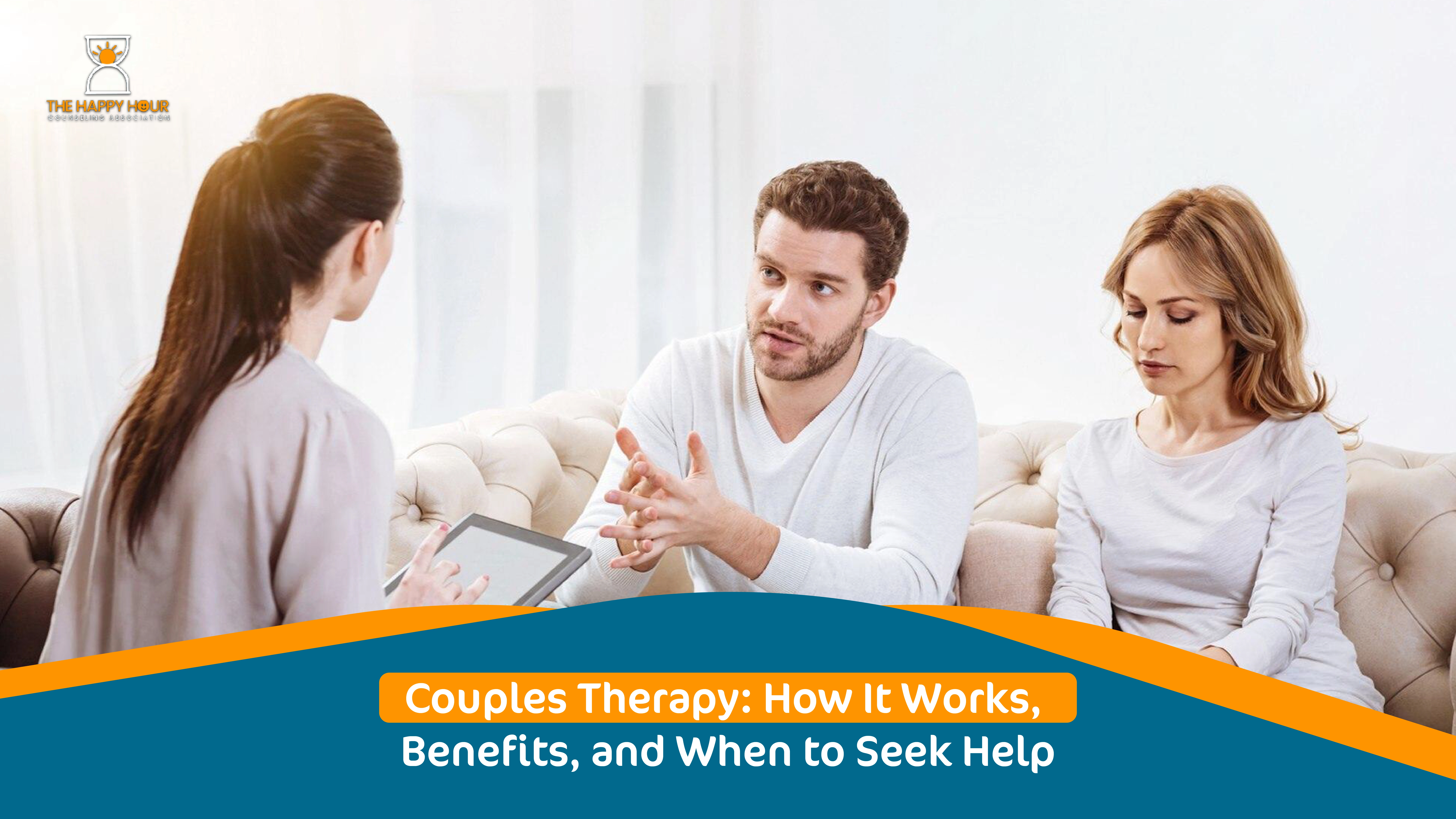
Couples therapy denotes a type of professional intervention in which both partners seek a counselor’s assistance to fix certain patterns in their relationship. Many people have the misconception that couples’ therapy is used in cases where relationships are already close to breaking down, but this view does not consider many of those who actually come seeking such therapy. Studies in marriage counseling reveal that almost one in two married couples has undergone some form of couple therapy during some part of their relationship.
Professional advice is important in relationships just like it is in case of a visit to the doctor for a routine check-up. The earlier some problems are detected and solved, the better. This article provides an explanation of what couples therapy is, how couples therapy works, how a typical therapy session looks like, and what the evidence of the effectiveness of couples therapy is. In addition, the article covers couples therapy of trust and infidelity, indications that a couple needs counseling, and tips on how to choose a therapist.
What Is Couples Therapy?
Couple therapy is an organized psychotherapy where the couple consults a therapist, either separately or together, for observing and changing the relational behaviors that are making tension in their relationship. This therapy uses different approaches of couples’ counseling like Emotion Focused Couples Therapy (EFT), Gottman approach, and Cognitive Behavioral Couples Therapy (CBCT). They all have different methods, but their key purpose is to enhance the relationship dynamics between the couples. When relationship difficulties affect the wider family, family counseling services can help family members improve communication, navigate conflict, and adjust to major changes together.
Couples from different stages of their relationships can benefit from the couples’ therapy regardless of whether they are dating, engaged, married or in a long-term relationship. The issues discussed in therapy may include:
- Communication problems and recurring misunderstandings.
- Frequent arguments that never seem to resolve.
- Trust issues, including suspicion or broken promises.
- Infidelity and its aftermath.
- Emotional disconnection or growing apart over time.
- Major life changes such as a new baby, job loss, relocation, or illness.
There is one important difference between individual therapy and couples’ therapy. In the former, it is the inner world of an individual which receives attention, while in the latter, the relationship between the couple becomes the subject of treatment. It should be noted that the therapist does not judge but simply identifies the problematic interaction process.
How Does Couples Therapy Work?
The majority of couples therapy starts with a period of assessment, where the counselor acquires a background history of the couple’s relationship, the issues they face, and their respective goals. After the assessment period, the treatment process proceeds through the following steps:
1. Finding harmful patterns of communication and confrontation, such as withdrawal, criticism, and defensiveness in discussions.
2. Learning healthy communication skills, including how to voice a grievance without blaming the partner and how to listen to the other person without preparing for counterargument.
3. Discussion of the underlying emotions, needs, and desires behind the surface conflicts because many everyday conflicts are not about dishes, schedules, or money but rather about hidden needs for respect or validation.
4. Discussion of the techniques of conflict resolution, usually in the form of practice sessions, both in the office and at home.
5. Settling on mutually agreeable relationship goals.
Treatment usually is a complex and often non-linear process, with couples reporting increased difficulty at the beginning of therapy as previously unaddressed issues come up to the surface. If there are issues relating to substance use that cause problems in a relationship, then substance use counseling services will also assist in dealing with the issues.
What Happens in Couples Therapy?
In the first session, the focus would be on intake – history of the relationship, concerns that prompted the client to seek counseling, and immediate safety concerns. Following the first session, the pattern of the sessions can become predictable.
Couples’ therapists use interventions to slow down rapid interactions that could happen at home between the partners. The therapist might require one partner to repeat back what he or she just heard before answering. If the partner feels any contempt or begins to stonewall, the therapist will stop the discussion. Both partners attend each session although there can be individual sessions incorporated into the process especially for the issues of infidelity and trauma.
Issues such as infidelity, sexual problems, or long-term resentments are brought up in the structured way. Homework is frequently assigned, such as daily check-ins or more complex assignments dealing with communication. Structured, short-term approaches can run 10 to 20 sessions, while couples addressing complex or long-standing issues may continue for longer. A 2025 randomized controlled trial from the University of Helsinki examining couple therapy and relationship support is currently tracking outcomes over several years, reflecting how seriously the field takes long term measurement of results. Couples therapy services offer an organized support for couples working through communication difficulties, conflict, trust issues, and emotional disconnection.
Benefits of Couples Therapy
It helps to build better communication skills between partners, helps in resolving existing conflicts, rebuilding trust, enhancing emotional connection, building healthier relationship patterns, and equipping individuals with useful tools for facing problems together. The process of solution focused brief therapy is all about solutions, strengths, and steps that can lead to something positive, for those couples who require an approach that would be goal oriented in nature.
Improve Communication
Through therapy, partners learn to communicate their needs through clear expression rather than expecting their partner to guess what their needs are. Listening actively is an aspect of communication that is trained within the sessions with the aim of preventing misunderstandings that lead to arguments.
Resolve Relationship Conflicts
Many conflicts in relationships tend to be cyclical in nature. Therapy can assist partners in identifying the arguments that they have frequently had in the past, realizing why such cycles keep on happening and how to effectively defuse the situation before it escalates. According to research highlighted by the Gottman Institute, about 69% of relationship conflicts are perpetual in nature and not solvable in the true sense of the term.
Rebuild Trust
The therapy offers a structure through which the client and therapist can address how that breakdown occurred in order to create honesty and transparency in the future. The process is a gradual one, based on realistic steps.
Reconnect Emotionally
Besides resolving conflicts, therapy helps develop emotional intimacy and repair the friendship that forms the backbone of many relationships by doing structured activities aimed at spending quality time together.
Strengthen the Relationship
In any relationship where there may not necessarily be an acute problem, it would still be beneficial to improve on certain things that could help build better relationships, which is why many couples engage in therapy.
Couples Therapy for Trust Issues and Infidelity
Infidelity is one of the hardest topics for a couple to bring up to a therapist since it influences both the safety and trust in their relationship. The purpose of a therapist in such cases is to deliver an environment that will allow them to have a conversation without one person shutting down and the other getting defensive.
The initial stage of therapy is usually about exploring why the breach of trust happened. This is important to distinguish from finding out whose fault it was. Couples who only see it from a standpoint of fault rarely succeed in resolving anything. Therapy then usually entails:
- Establishing clear, mutually agreed steps toward transparency.
- Creating space for the hurt partner to express pain without derailing every future conversation.
- Helping the partner who broke trust take consistent, demonstrable action rather than relying on words alone.
On occasion, therapists may advise one or both partners to seek out individual therapy along with couples therapy, especially if their trauma response or unresolved psychological issues are impeding the healing process.
Signs You May Need Couples Therapy
Patterns that indicate that counseling may be beneficial include:
• Having the same arguments again and again without solving them.
• Deterioration of communication between you two.
• The inability to resolve conflicts.
• Loss of trust due to either cheating or unfulfilled promises.
• Either of the two-feeling disconnected emotionally.
• Building up resentment.
• Pondering divorce.
• Some sort of life experience like illness, unemployment, or birth of a child putting strain on the relationship.
• The need to enhance an already strong relationship even before problems arise.
Does Couples Therapy Work?
The evidence base for couples counseling is rather strong. According to the findings of Shadish & Baldwin’s meta-analysis, published in the Journal of Consulting and Clinical Psychology, when the average couple undertook the treatment, it improved compared to 80% of the untreated couples with a huge effect size of 0.84. In their meta-analysis published in the Journal of Marital and Family Therapy, in 2019, Wiebe et al. looked at 27 studies and almost 1,400 couples and discovered great results for Emotionally Focused Therapy among different samples, even among couples, where one member suffered from depression, as well as infertile couples.
In general, the literature is consistent in its finding that 70-80 percent of couples show significant progress following treatment as opposed to those without any form of help. According to a more recent study done in 2025 that was published in Neuroscience & Biobehavioral Reviews (ScienceDirect), a systematic review and meta-analysis of couple-based treatments for depression based on clinical trials from PubMed, Scopus, and Web of Science, there is still evidence in favor of couple therapy for outpatients and community mental health settings although new and longer programs demonstrated smaller effect sizes. For those couples seeking goal-oriented therapy, Solution-Focused Brief Therapy (SFBT) is an approach that is concerned with practical solutions, existing strengths, and taking steps towards positive change.
A number of variables influence the effectiveness of therapy. The level of engagement of both partners plays a critical role here, and positive results are more likely if both participants have a genuine desire to engage in therapy rather than being forced into it. The presence of a well-trained therapist that works with evidence-based methods, as well as patience – because changes in long-lasting patterns of behavior do not happen quickly – also influence the results of therapy. Couples therapy alone is not enough sometimes in case of addiction or abuse problems or mental crisis of one or both partners.
Is Couples Therapy Worth It?
Compared to the costs of continuing emotional and practical pain that comes from ongoing relational stress, therapy is seen as a wise choice financially. People seeking therapy when their issues are at an early stage will be able to cope easily compared to people who are seeking therapy when they have reached a crisis point.
Therapy is beneficial in the sense that it equips the couple with skills. Unlike when the couple depends on the therapist in all situations, they gain skills which they can apply even after leaving therapy. It should be noted that therapy may not be appropriate for some cases. In cases where there is a safety threat in the relationship, therapy is not the best approach because the therapy models used are not meant for such conditions of imbalance in the power between the two parties. Approaches informed by positive psychology can also help couples build on their strengths, recognize what is working well, and intentionally develop greater connection and relationship satisfaction.
How to Choose a Couples Therapist
Choosing an effective therapist is very important to the success of couple’s therapy. The following are among the aspects one needs to consider when choosing a therapist:
• Either the therapist is appropriately licensed and trained in couple-specific methods such as Gottman, EFT, or CBCT.
• Either the therapist has experience with couples facing similar issues, which may include affairs, blended families, and communication problems.
• The therapist’s general style of working and whether the style fits the couple.
• Practical aspects such as the therapist’s availability, physical location, and cost
• Either both the partners feel at ease and unbiased around the therapist, because if not, then the whole process could become futile due to lack of trust.
Recently, telehealth has also provided couples more opportunities to access therapy. According to the results of a study done by Wrape and McGinn in 2021 and published in the Journal of Marital and Family Therapy, online couples’ therapy produces results as good as in-person couples’ therapy, and there is a greater tendency of couples finishing therapy online due to fewer barriers.
How to Get the Most from Couples Therapy
The following are some tips that can help make therapy more effective:
• Showing up ready to engage in the process in an authentic way, regardless of whether you feel uncomfortable with the subject matter.
• Really listening to your partner without getting defensive, something that can be difficult yet very beneficial.
• Concentrating on hearing the point of view of your partner instead of trying to dominate the discussion.
• Working on communication techniques outside of therapy as well as during it.
• Remaining patient because changes are not going to happen overnight.
• Having reasonable expectations about what can be accomplished.
How Happy Hour Counseling help with Couples Therapy
Happy Hour Counseling can support couples therapy by providing a safe, supportive space where partners can openly discuss their concerns and work through challenges together. Through guided conversations, couples can improve communication, rebuild trust, manage conflicts, and better understand each other’s needs and feelings. With the help of a trained therapist, couples can learn healthy ways to resolve disagreements and develop stronger emotional connections, making their relationship more supportive and fulfilling.
FAQs
Are couples counseling effective?
Studies have confirmed its effectiveness on numerous occasions. Several meta-analyses, among which is an important review by Shadish and Baldwin, showed that those couples who underwent the therapy were better off compared to the vast majority of couples who did not undergo therapy at all, especially when it came to certain techniques such as Emotionally Focused Therapy.
How does marriage counseling work?
The work of marriage counseling involves several stages, such as assessment, the identification of unhealthy patterns, the acquisition of new communication skills and their application in sessions and during homework based on the goals set.
What problems can be solved with the help of couples therapy?
It can help with communication problems, constant conflict, lack of trust, infidelity, emotional detachment, adjusting to major changes, as well as enhancing a relationship which works fine but could work better.
How long does couples therapy last?
It varies depending on what problems couples have and which approach was chosen. Short-term structured therapy usually takes about 10 to 20 sessions, sometimes more.