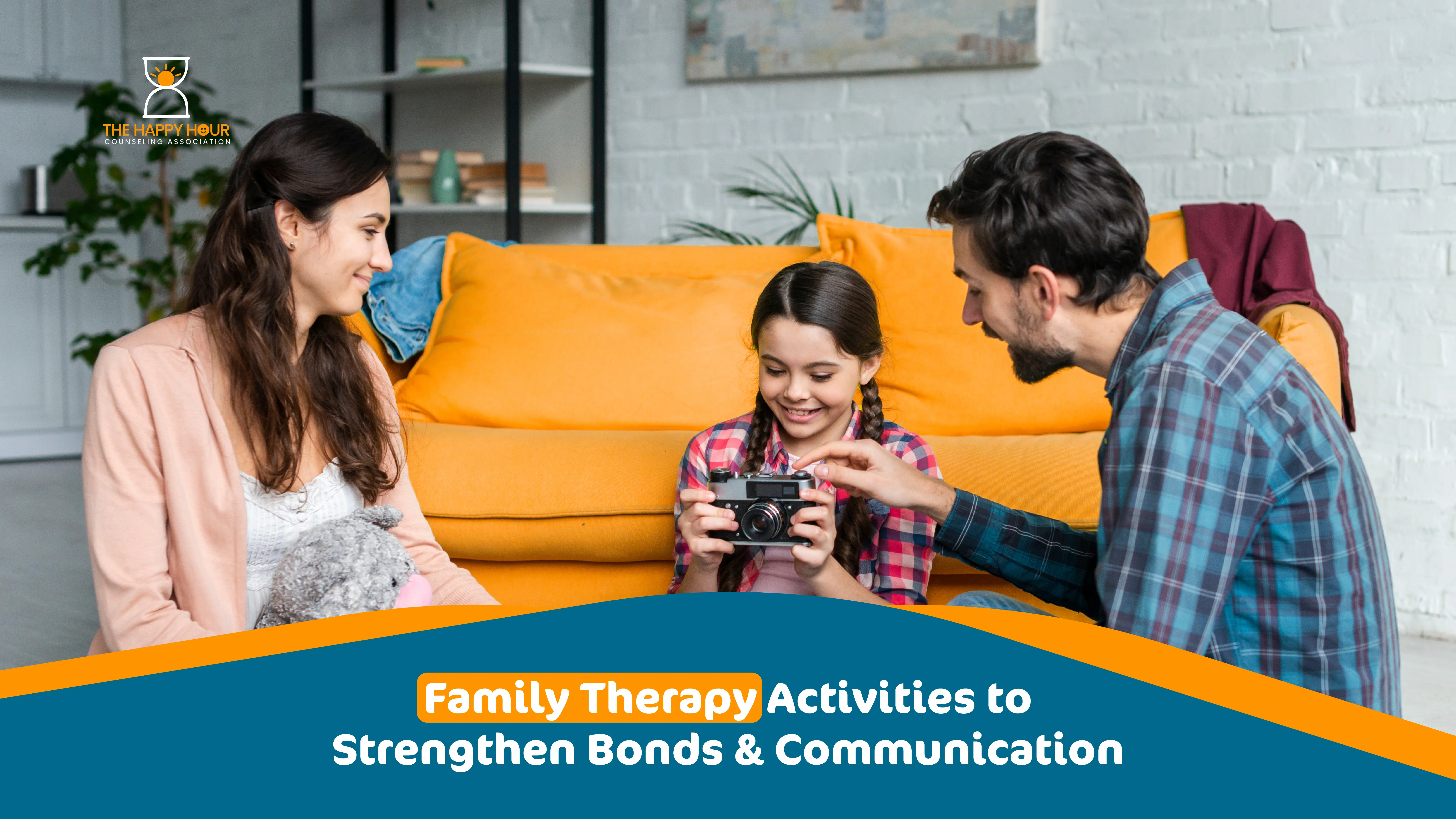
Strong family communication and emotional attachment are important for healthy relationships, even so, many families find it hard to communicate effectively, struggling with conflict, and rising emotional distance. Therapeutic activities offer organized ways to reconstruct trust, improve understanding, and support the development of connection. This blog explores practical, evidence-based family therapy activities which are intended to strengthen relationships and improve communication.
What Are Family Therapy Activities?
Family therapy activities are particularly organized exercises planned to advance communication, reinforce emotional connections within a family and bring conflicts to resolution. These practices are extensively implemented by therapists during sessions but can also be useful at home to strengthen positive interaction patterns. Family therapy activities for building relationships concentrate on establishing trust, empathy, and mutual understanding which make them respected for both adults and children.
These activities can be applicable and useful in different situations including but not limited to addressing unending conflicts, refining daily communication, or simply spending meaningful time together. Therapeutic activities for families provide real-world tools to deal with challenges and build strong relationships from directed conversations toward using play as a creative method. They are exclusively beneficial during periods of stress, transition, or when families want to proactively strengthen their connections again. Family Counseling supports improving communication and strengthening family relationships professionally.
Benefits of Family Therapy Games and Exercises
Family therapy games strengthen communication, deepen emotional bonds, and promote lasting family relationship growth and stability.
Improves Communication Skills
Communication activities for family therapy aid family members to communicate their feelings and thoughts more openly and confidently. They learn skills of active listening and reduce chances of misunderstandings. Through consistent practices, they form new habits of communication that will help them understand each other better and show appreciation.
Builds Trust and Emotional Safety
Members start to gain trust among themselves through the expression of their feelings in a safe and controlled setting through various therapeutic activities for families. It supports people to become honest about themselves without being judged, thereby providing emotional security to them.
Encourages Empathy and Understanding
Participating in family dynamics group therapy activities enables family members to get familiar with one another’s emotions and point of view. Such an approach fosters empathy because it teaches people how to put themselves in another person’s position.
Reduces Conflict and Tension
Family therapeutic games offer a constructive means of dealing with conflicts and tension. These games offer an effective approach to handling family anger, conflicts, and misunderstandings. Families are able to establish a peaceful atmosphere at home by engaging in such games.
Strengthens Long-Term Relationships
The exercises for family therapy are the activities which are executed consistently and can empower the family to foster healthy emotional connections. It reassures teamwork, mutual respect, and enjoyable moments together. Eventually, this supports in forming stronger relations among family members.
Communication-Focused Family Therapy Activities
Communication activities recover family listening, expression, understanding, minimize conflict, and strengthen emotional connections successfully. Couples therapy Services improve trust, emotional connection, and communication between partners within a family.
Active Listening Exercise
In these communication activities for family therapy, there will be a person in the family who talks while everyone else listens without speaking. In the next step, the listeners paraphrase the message that they understood to make sure they have understood the right message.
“I Feel” Statements Practice
Therapeutic activities for families are activities that teach people how to vent their emotions without pointing fingers. Rather than telling someone “You make me angry,” one learns to tell themselves, “I am upset when…” By doing this, we create healthy communication among family members.
Talking Stick Activity
There is one specific family therapy game that is referred to as the “Talking Stick” game. Interestingly, it involves passing an object around, and only those who have it in their hands are allowed to talk, while everyone else listens quietly without talking back.
Relationship-Building Family Therapy Activities
Relationship-building activities support emotional bonds, improve appreciation, boost connection, and promote positive family interactions consistently.
Family Appreciation Circle
Each family member takes turns sharing something positive about others in this therapeutic family games activity. It could involve somewhat they value, such as a quality, action, or moment. It shapes and builds gratefulness, boosts self-confidence, and strengthens emotional warmness within the family unit.
Memory Sharing Game
One is expected to think back to those happy memories with one’s family that are close to their heart in the family therapy activity for building relationships. These memories will strengthen their bonds, give them comfort, and remind them how happy they make each other.
Weekly Family Check-In
A communication activity for family therapy approach requires scheduling time for communication. Each one describes their best experiences and the worst experiences from their weekly period and what they needed emotionally. This practice enhances mutual understanding, prevents emotional isolation, and builds up inter-personal relationships.
Fun and Interactive Family Therapy Games
Interactive therapy games enhance communication, empathy, teamwork, reduce stress, and strengthen enjoyable family emotional connections.
Emotion Charades
In this mental health group activities for youth style game, this is an activity in the form of a game whereby various family members portray diverse emotions, and other participants try to guess what emotion they are portraying. The activity increases emotional intelligence and allows one to determine his/her emotions better through open conversation.
The Compliment Game
The “Therapeutic Activities for Families” exercise includes a game where everyone passes good remarks around. This allows each individual to compliment other members positively. This builds their self-worth and confirms that people feel good about themselves, rather than being focused on the negative aspect of things.
Problem-Solving Challenge
Group task where each individual is working as part of a team to try and complete an assigned puzzle. This family therapy game will require individuals to develop skills in working in harmony, showing patience, and being able to make collective decisions.
Family Dynamics Group Therapy Activities
Family dynamics activities advance understanding, empathy, communication patterns, roles, and emotional connections within families. Children and teens Counseling Service supports younger members to express emotions and improve understanding.
Role Reversal Exercise
The interactive therapy activities for adults’ technique involves family members taking on the roles of one another to gain more insight into various viewpoints. It develops empathy, minimizes criticism, and enables people to realize the impact of their actions on other members of the family.
Genogram Activity
The family dynamics group therapy activities approach entails making a diagram showing how members of a family relate to each other, the behavioral patterns that exist among them, and how they emotionally connect through generations. This gives them an understanding of their history.
Conflict Resolution Role Play
This is an example of an exercise in communication activities that involves the family in resolving their disagreements in a controlled manner. This is achieved through acting out conflicts that enable family members to handle disagreements in a positive way.
Therapeutic Activities for Different Age Groups
Age-specific family activities expand communication, emotional understanding, participation, and connection across children, teens and adults.
Activities for Young Children
These play therapy activities rely on art, stories, and imagination techniques that will allow children to express their feelings through means that are not necessarily verbal. Through the activities, therapy becomes fun and easy, but parents are also able to gain insight into their child’s emotional world.
Activities for Teens
The mental health group activities for youth program involves journal writing, discussion sessions, and distinctiveness activities. The activities enable the adolescents to represent themselves in a secure environment, develop awareness about themselves, and communicate effectively with their families in an essential stage of their emotional development.
Activities for Adults
The interactive therapy activities for adults involve deep communication exercises as well as activities for building trust. Adults learn to be emotionally honest, resolve their conflicts, and understand one another better through the discussion sessions, thus establishing a healthier and more balanced family setting.
Tips for Successful Family Therapy Activities
Family therapy succeeds with consistency, openness, support, safe environment, and improved communication among members.
Create a Safe, Judgment-Free Environment
Although therapeutic activities for families, it becomes authoritative to make sure that all the participants are emotionally secure. Criticism, blame, and even interruptions are best avoided when holding these therapy sessions. A respectful atmosphere makes people speak out more freely.
Be Consistent and Patient
Exercising family therapy dependably can foster the development of habits connected to communicating and building trust. It may take time to see developments, but patience is required. The practice will enable beneficial traits to eventually be a part of daily family dynamics.
Encourage Participation but Don’t Force It
For family therapy communication sessions, participation should always be voluntary. One should reassure everyone to participate, but at the same time, one must confirm that there is no pressure applied. It is important to give individuals the opportunity to feel content.
Focus on Progress, Not Perfection
Improvement comes slowly through family therapy exercises used to build relations. Do not expect immediate perfection in communication but take baby steps at a time. Acknowledging small achievements will keep families encouraged throughout the process.
Free and Easy Family Therapy Activities to Try at Home
There are plenty of low-priced family therapy exercises which can effortlessly be done from the comfort of your own home, and are completely free of charge. Even simple practices like reviewing one’s good experiences of the day or exchanging words of appreciation, and quick emotional evaluations can go a long way toward improving the communication between members of a family unit.
Family units can also utilize everyday events to bring the family closer together, whether through cooking meals together, communicating their days as they eat, or working together to address small issues. Creating family therapy from such occurrences will lead to stronger bonds without much effort. If such acts are combined as a routine activity, they will eventually result in better mutual trust and improved comprehension.
How Happy Hour Counseling Association Support Family Therapy Activities
Family Therapy Activities is aided in its operations by Happy Hour Counseling Association. The association helps the activities gain a structured approach through counseling techniques to foster proper communication between family members and promote a harmonious bond. It offers assistance to families by ensuring that they conduct themselves properly and establish an emotional link with each other.
FAQs
How frequently do you have to perform therapy activities within a family?
They should be achieved once a week for better results.
Is it possible to perform therapy activities without the presence of a therapist?
Yes, many activities can be done in the absence of an expert to achieve positive results.
What should you do if one of your relatives refuses to perform therapy activities?
Just accept their decision and do not apply any pressure.
Are these games useful for blended families?
These games are beneficial for blended families; they support improving relationships and communication.
How much time will you require to get results from such exercises?
The effect will appear rather quickly after a few weeks.