
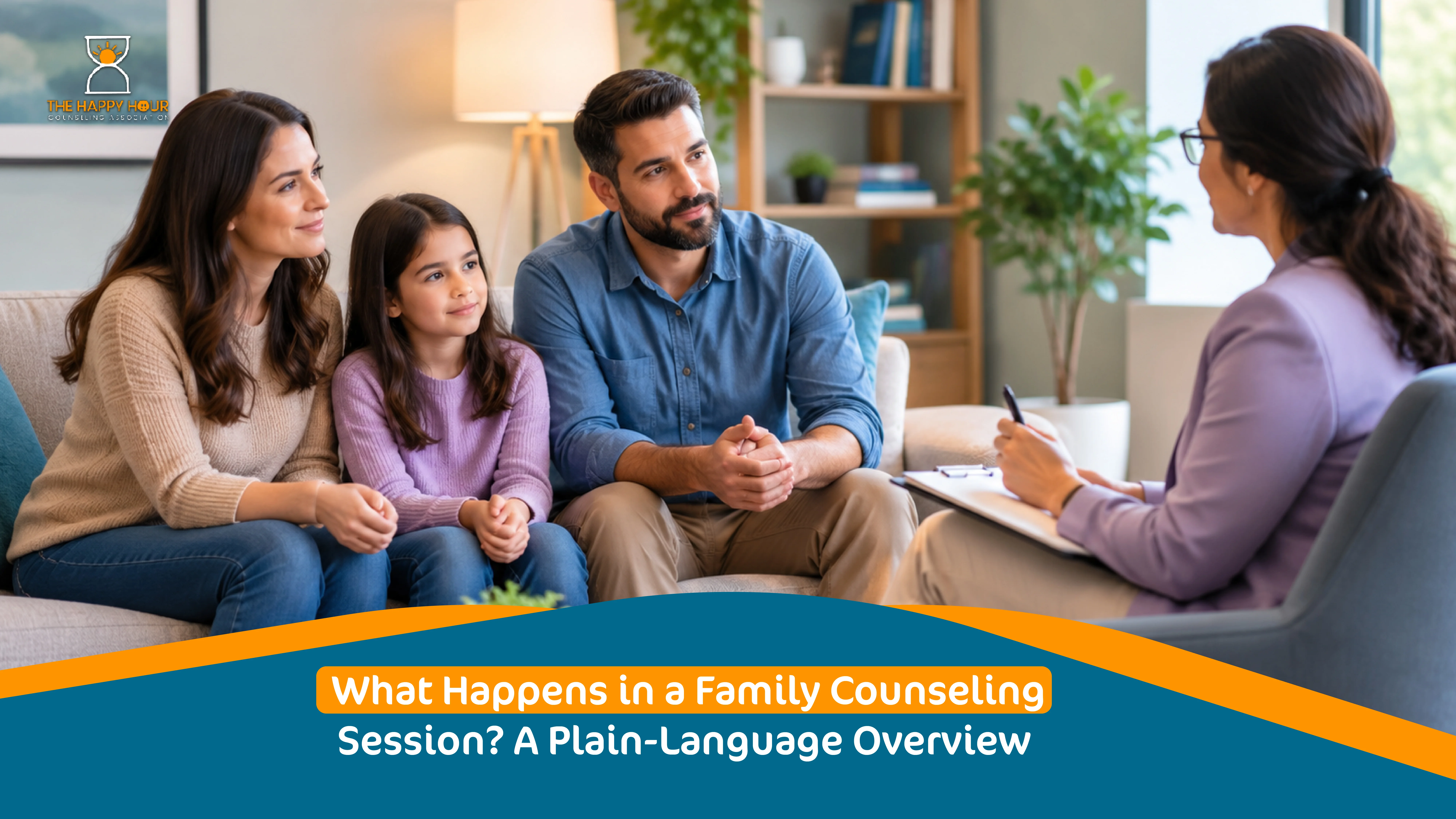
If you’ve ever wondered what happens in family counseling, you’re not alone. Many families feel nervous before their first appointment. Will we be blamed? Will the therapist take sides? Will we have to talk about things we’d rather avoid?
The short answer: family counseling is a guided, supportive conversation. A trained professional helps your family understand each other better, communicate more clearly, and work through problems together. Nobody is put on trial, and nobody is the problem.
This guide walks you through what family therapy is, how family therapy sessions work from the first call to the final visit, what it costs, and how to know when it’s time to get started. If you’d like to talk to someone directly, you can explore our family counseling services at any point.
What Is Family Therapy?
Family therapy (also called family counseling) is a type of talk therapy that involves two or more family members working with a licensed mental health professional. The focus isn’t on fixing one “difficult” person. Instead, the therapist looks at how your family functions as a system: how you talk, how you handle conflict, how roles are shared, and how everyone affects everyone else. The American Association for Marriage and Family Therapy (AAMFT) is one of the main professional bodies for this type of work.
Think of your family like a mobile hanging from a ceiling. Touch one piece and the whole thing moves. If a teenager is struggling, a parent is overwhelmed, or a couple is in conflict, the whole family feels it. Family therapy works with that whole picture.
Family Therapy vs. Family Counseling: Is There a Difference?
In everyday use, the two terms mean nearly the same thing. Family counseling often sounds a bit more casual and may focus on specific, short-term issues. Family therapy is sometimes used for deeper, longer-term work. Both approaches aim to improve relationships and communication. Many providers use the terms interchangeably, and family counseling services usually cover both.
Who Can Attend?
Family is defined broadly. Sessions can include:
- Parents and children
- Step-parents and blended families
- Grandparents and extended relatives
- Siblings
- Partners or spouses (some couples also choose couples therapy alongside family sessions)
- Foster or adoptive families
- Anyone who plays a meaningful role in the family’s life
Sometimes not everyone attends every session. A therapist may meet with just parents, just siblings, or even one person, depending on what’s helpful. In some cases, an individual may also benefit from individual counseling running alongside the family work.
When to Consider Family Therapy
You don’t need to be in a crisis to benefit. Still, there are common signs that it may be time to reach out. Here is when to seek family counseling:
- Constant conflict or tension. Arguments happen daily, or the house feels like walking on eggshells.
- Communication has broken down. Family members avoid each other, shut down, or stop sharing.
- A major life change. Divorce, separation, remarriage, a move, a new baby, or a job loss can shake family balance.
- Grief or loss. The death of a loved one affects everyone differently, and families can drift apart while grieving.
- A child or teen is struggling. Behavior changes, school problems, anxiety, depression, or substance use often have a family dimension. Dedicated children and teen counseling can work hand in hand with family sessions.
- Mental health or addiction concerns. When one person is struggling with illness or addiction, the whole family is affected. Families can learn more about substance use counseling and how loved ones can be part of recovery. The National Institute of Mental Health also offers guidance on finding help.
- Blended family challenges. Merging households and parenting styles takes time and support.
- Caregiving stress. Caring for an aging parent or a family member with a disability can strain relationships.
- Repeating patterns. The same fight keeps happening, just with different details.
If you’re asking yourself whether you “need” it, that’s often a sign it could help. Waiting until things are at breaking point is common, but earlier support usually leads to easier progress.
What Happens in Family Counseling: Step by Step
Here’s the family therapy process from start to finish. Every therapist works a little differently, but most follow a similar path.
Step 1: Reaching Out and Booking
The process begins with a phone call, email, or online form. Staff typically ask a few basic questions: who’s interested in attending, what’s going on in general terms, and what your schedule and insurance look like. You can contact our team or book an appointment online in a few minutes.
You don’t need to explain everything up front. A short summary is enough. This is also a good moment to ask about fees, session length, and whether sessions are in person or online.
Step 2: The First Session (Assessment and Getting Acquainted)
The first session is mostly about understanding your family. Expect it to last about 60 to 90 minutes. Here’s what usually happens:
- Introductions and ground rules. The therapist explains how sessions work, what confidentiality means, and how everyone gets a chance to speak.
- Everyone shares their perspective. Each person is asked what brought them in and what they hope will change. Different viewpoints are welcome. In fact, they’re expected.
- Background questions. The therapist may ask about family history, daily routines, major events, strengths, and stressors.
- A first look at patterns. You might be asked how a typical disagreement unfolds or who tends to step in when tension rises.
You are not expected to perform or say the right thing. Awkward silences and mixed feelings are completely normal.
Step 3: Setting Goals Together
After the first one or two sessions, the therapist works with your family to set clear goals. These might be:
- We want to argue less and listen more.
- We want our teen to feel heard.
- We want to rebuild trust after a hard year.
- We want to cope better as a family after a loss.
Goals give the work direction and let you measure progress. Your therapist may also suggest a rough number of sessions and how often to meet, commonly weekly or every other week.
Step 4: The Working Sessions
This is the heart of the family therapy process. A typical session lasts 50 to 60 minutes and may include:
- A check-in. How has the week been? Any wins or challenges?
- Guided conversations. The therapist helps family members talk about difficult topics in a calmer, more productive way. They may slow things down, rephrase comments, or invite quieter members to share.
- Pattern spotting. The therapist helps you notice cycles, such as criticism leading to defensiveness leading to withdrawal, so you can interrupt them.
- Skill building. You may practice active listening, “I” statements, problem-solving, boundary setting, or emotional regulation.
- Role-plays or exercises. Sometimes families try out new ways of responding right in the room.
- Homework. Small, realistic tasks between sessions, like a weekly family meeting or a daily five-minute check-in, help new habits stick.
A good therapist stays neutral. Their job is not to decide who’s right but to help everyone feel heard and move toward solutions.
Step 5: Reviewing Progress
Around the midpoint, and periodically after, your therapist will check in on your goals. What’s improving? What still feels stuck? Is anyone missing from the conversation? Plans are adjusted as needed.
Step 6: Wrapping Up
When goals are met, therapy typically winds down. Sessions may become less frequent, and the therapist will help you plan for the future, including how to handle setbacks. Many families find it reassuring to know they can come back for a “tune-up” if needed.
How Does Family Therapy Work?
If you’re wondering how family therapy works beyond the session structure, here is the core idea: change happens when the way family members interact changes.
Therapists draw on several well-researched approaches. You don’t need to memorize them, but it can help to know the names:
- Structural family therapy. Focuses on roles, boundaries, and hierarchies within the family. It’s often helpful for parenting struggles and blended families.
- Strategic family therapy. Uses practical, goal-focused techniques to interrupt problem patterns.
- Bowenian (family systems) therapy. Explores how family history and emotional patterns pass down through generations.
- Narrative therapy. Helps families separate the person from the problem and retell their story in a more empowering way.
- Cognitive behavioral family therapy. Targets unhelpful thoughts and behaviors that fuel conflict.
- Emotionally focused therapy. Strengthens emotional bonds and attachment, especially useful for couples and parent-child relationships.
- Solution-focused therapy. Looks at what’s already working and builds on it, usually in a shorter timeframe. You can read more about Solution Focused Brief Therapy (SFBT) and how it works in practice.
Some families also find that body-based and strengths-based approaches, such as somatic therapy and positive psychology, help them manage stress and build resilience alongside talk therapy.
Most therapists blend methods based on what your family needs. You can always ask, What approach do you use, and why do you think it fits us? For a general introduction to how psychotherapy works, the American Psychological Association is a trusted resource.
Benefits of Family Therapy
The benefits of family therapy reach beyond the therapy room. Research and clinical experience point to improvements like these:
- Better communication. Family members learn to express needs clearly and listen without interrupting or judging.
- Less conflict. Understanding triggers and patterns helps reduce repeated arguments.
- Stronger relationships. Trust, empathy, and connection often grow when people feel understood.
- Healthier boundaries. Families learn how to balance closeness with respect for individual space.
- Support for individual mental health. When one person struggles with anxiety, depression, trauma, or addiction, the family’s involvement can improve outcomes.
- Improved parenting and co-parenting. Parents get tools for consistent, supportive approaches.
- Smoother transitions. Divorce, remarriage, relocation, or loss feel more manageable with support.
- Lasting skills. The communication and problem-solving tools you learn keep working long after therapy ends.
These family counseling benefits often show up in everyday life: calmer dinners, fewer slammed doors, more honest conversations, and a stronger sense of being a team.
What to Expect from Family Therapy: Common Concerns
Will the therapist take sides?
No. Family therapists are trained to stay impartial. Their role is to understand every perspective and guide the family toward better patterns, not to assign blame.
What if someone refuses to come?
It happens often. Therapy can still begin with the willing members. Change in one part of the system often influences the rest, and reluctant family members sometimes join later once they see it’s not a blame session.
Will my kids have to talk about things they’re not ready for?
Good therapists adapt to age and comfort level. Younger children may express themselves through drawing or play, and teens are given space to speak without feeling attacked. Nobody is forced to share something they aren’t ready to.
Is what we say confidential?
Generally, yes. Therapists protect privacy, with limited legal exceptions, such as risk of serious harm to someone or suspected abuse. In family therapy, your therapist will explain how confidentiality works when multiple people are involved, including how private conversations with individual members are handled.
Will things get worse before they get better?
Sometimes. Talking about long-avoided issues can stir up strong emotions at first. That’s a normal part of the process, and your therapist will help keep the conversation safe and manageable.
What if it feels awkward?
It will, at first. Most families say the discomfort fades quickly once they see the therapist guiding the conversation and keeping things fair.
How Much Does Family Therapy Cost?
A common question is how much does family therapy cost, and how much does family counseling cost in general. The honest answer: it varies.
Typical factors include:
- Location. Larger cities usually cost more.
- Therapist credentials and experience. Licensed marriage and family therapists (LMFTs), psychologists, and clinical social workers may price differently.
- Session length and frequency.
- In-person vs. online. Online sessions may be slightly cheaper or similarly priced.
In many places, a session often falls somewhere between $100 and $250, though community clinics, nonprofits, and university training centers may offer lower-cost or sliding-scale options, sometimes as low as $30 to $80. Rates differ by country and region, so always confirm directly with the provider.
Ways to Make It More Affordable
- Check your insurance. Many plans cover family therapy when it’s tied to a diagnosed condition. See the insurance plans we accept and ask about in-network providers and copays.
- Ask about sliding-scale fees. Many therapists adjust prices based on income.
- Look for community mental health centers. These often provide lower-cost family counseling services. The FindTreatment.gov directory, run by SAMHSA, can help you search by location.
- Consider training clinics. Supervised graduate students offer reduced rates.
- Try employee assistance programs (EAPs). Some employers offer a few free sessions.
- Explore online platforms. These can lower costs and expand scheduling options.
How Long Does Family Counseling Take?
There’s no single answer. Many families see meaningful progress within 8 to 20 sessions, especially for focused concerns like communication problems or a specific life transition. More complex situations, such as trauma, long-standing conflict, or serious mental health concerns, may take longer.
Your therapist should be able to give you a rough estimate after the first few sessions and update it as you go.
Tips for Getting the Most Out of Family Counseling Sessions
- Come with an open mind. You don’t have to agree, just be willing to listen.
- Be honest, and be kind. Share how you feel without attacking others.
- Avoid turning sessions into a courtroom. The goal is understanding, not winning.
- Do the homework. Practice between sessions is where real change happens.
- Be patient. Family patterns took years to form and take time to shift.
- Speak up if it’s not working. If you feel unheard or the fit isn’t right, tell your therapist. A good one will welcome the feedback.
- Show up consistently. Regular attendance builds momentum.
How to Choose the Right Family Therapist
Finding the right fit matters as much as the method. Consider:
- Credentials. Look for licensed professionals, such as LMFTs, licensed psychologists, or licensed clinical social workers, with training in family systems. In Ohio, you can verify a counselor’s or MFT’s license through the Ohio Counselor, Social Worker, and Marriage & Family Therapist Board.
- Experience with your situation. Ask whether they’ve worked with families facing similar issues.
- Style and approach. Some therapists are more structured, others more conversational.
- Practical details. Location, hours, fees, insurance, and online availability.
- Comfort level. Many therapists offer a brief initial call. Trust your gut about whether your family would feel at ease. You can learn more about our team before you decide.
FAQs
What is family therapy in simple terms?
It’s guided counseling for families that helps members communicate better, resolve conflict, and support each other through challenges.
How many people need to attend?
At least two family members, though more is common. Some sessions may include only part of the family.
How does family counseling work for kids and teens?
Therapists use age-appropriate methods, from play and drawing for younger children to open, respectful dialogue for teens, so everyone feels safe participating. See our children and teen counseling service for more.
Can family therapy be done online?
Yes. Online sessions are widely available and can work well, especially for families with busy schedules or members in different locations.
Is family counseling only for serious problems?
No. Many families come in for everyday struggles like constant bickering, parenting disagreements, or major life changes. Getting help early often makes things easier.
Does family therapy really work?
Studies have shown that family therapy can be effective for a range of concerns, including child and adolescent behavior problems, depression, eating disorders, substance use, and relationship conflict. Results depend on participation, the therapist fit, and the issues involved.
Final Thoughts
Understanding what happens in family counseling takes much of the fear out of getting started. In a nutshell: you’ll meet with a trained professional, share your perspectives, set goals together, learn practical communication skills, and gradually build healthier patterns. It’s not about blame. It’s about working as a team.
Every family faces rough patches. Seeking support isn’t a sign of failure. It’s a sign that you care about the people in your life enough to invest in them.
If you’re considering family counseling services, start small: call a provider, ask questions, and book a first session. At Happy Hour Counseling Association, our licensed team supports individuals, couples, and families across Ohio. You can book an appointment get in touch with us, or browse more helpful articles on our blog.